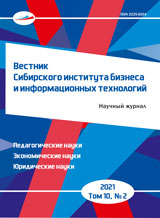
Scientific and practical peer-reviewed journal
Рецензируемый научно-практический журнал «Название журнала на русском» «Nazvanie zhurnala na russkom» зарегистрирован Федеральной службой по надзору в сфере связи, информационных технологий и массовых коммуникаций 05 августа 2014 года (Свидетельство о регистрации ПИ № ФС 77-58913 — печатное издание и свидетельство, Эл № ФС 77-58914 — сетевое издание).
Тираж 1000 экземпляров, периодичность 4 выпуска в год.
Распространение – Российская Федерация, зарубежные страны.
Электронная версия журнала с мультимедийными приложениями доступна по адресу rpmj.ru.
Выходит при поддержке Министерства здравоохранения России и Федерального государственного бюджетного учреждения «Федеральный медицинский исследовательский центр имени П.А.Герцена» Министерства здравоохранения Российской Федерации.
Журнал «Исследования и практика в медицине» - профессиональное медицинское издание, в котором отражаются результаты новейших исследований в области медицинских наук, организации здравоохранения, фундаментальных и прикладных исследований.
В издании представлен уникальный клинический опыт как практических врачей, так и специалистов разных научных и клинических школ. Публикуются новости медицинского и фармацевтического сообществ, научно-практические статьи для целевой аудитории - врачей различных специальностей.
Журнал, в первую очередь, имеет практическую направленность и публикует статьи ведущих специалистов, освещающих актуальные проблемы клиники, диагностики и лечения широкого круга заболеваний, алгоритмы диагностики и терапии различных нозологий. В нем публикуются передовые и оригинальные статьи, краткие сообщения, заметки из практики, лекции и обзоры. Мы стремимся развивать принцип междисциплинарного подхода, делаем все возможное, чтобы наши читатели были в курсе современных достижений медицинской науки и практики, помогаем врачам в освоении современных принципов распознавания и лечения широкого спектра заболеваний.
Current issue
SECTION I. THEORY AND METHODS OF TEACHING AND EDUCATION (BY FIELDS AND LEVELS OF EDUCATION) (PEDAGOGICAL SCIENCES)
The article considers methodological features of teaching econometrics at the university. The problems that hinder high-quality training of specialists are investigated. The problem associated with the current trend in higher education is highlighted: an increase in the share of independent work due to a reduction in classroom workload. The integrative nature of the discipline «Econometrics», an insufficient level of systemic knowledge formed by students, the presence of «clip thinking» among modern youth, high variability of the content of educational material on the one hand and a decrease in the classroom workload on the other hand create certain difficulties in high-quality mastering of the discipline. The author substantiates the idea that a certain structuring of educational material on econometrics is necessary. The objectives of the study are defined: structuring the content of the course «Econometrics» and identifying methodological techniques for improving teaching methods. A special form of organizing lecture material in the form of «supporting notes» nested in generalizing tables is proposed: the left part contains blocks of theoretical material, the right part - blocks with solutions to practical problems explaining theoretical provisions. The choice of supporting schemes in the form of tables, block diagrams, clusters, and drawings is substantiated to ensure the connection of knowledge elements. Since the solution of econometric problems is usually associated with the processing of large data arrays, special attention is paid to the use of MS Excel tools when conducting econometric calculations. Specially designed tasks for self-assessment in the form of a notebook with a printed base have been developed for the lecture material. Methodological aspects of structuring are demonstrated using materials from the textbook «Lecture Course on Econometrics in Tables, Figures, and Diagrams» developed by the author. The author of the article came to the following conclusions: the proposed structuring of the educational material makes it possible to compensate for the lack of classroom hours for studying the discipline and create conditions for high-quality mastery of the material. The proposed approaches to structuring the educational material may be of interest to specialists conducting classes in other disciplines.
The paper discusses the strategy for the development of engineering education in the Omsk region within the framework of the regional project «TORIO» (Territory of Advanced Development of Engineering Education) for 2024-2027. The main areas and activities of the project include the creation of a unified career guidance educational environment, expansion of the network of university specialized classes (hereinafter referred to as UPC), the introduction of innovative teaching technologies and systematic career guidance work with schoolchildren. Project objectives: maintaining the human resources potential of the engineering industry of the Omsk region, improving the quality of training and reducing the adaptation period during the transition from secondary to higher education, forming career guidance and interest in engineering professions among young people, supporting gifted students and developing innovative teaching technologies. The objectives are achieved by creating conditions for personal development and career guidance for schoolchildren, introducing specialized training within the framework of the educational and training complex based on comprehensive schools and Omsk State Transport University, developing teaching aids, creating information and educational platforms, video lectures and mobile applications, conducting career guidance events: excursions, olympiads, master classes, practices, competitions, test drives of specialties, constant communication with parents and using digital channels for information. The results of the effectiveness assessment include quantitative indicators (the number of students, olympiad winners, graduates employed by enterprises) and qualitative indicators (level of knowledge, interest in the profession, mastering technologies). Data analysis shows an increase in academic performance in the Unified State Exam by 14-28%, which indicates positive results of the project. Thus, an integrated system of education and career guidance is being created to form a competitive engineering generation of the Omsk region through systematic work with young people at all stages of education.
The professional work of police officers requires a willingness to solve non-standard problems in conditions of high uncertainty and stress. Traditional police training methods often focus on demonstrating technical skills in artificial settings, which do not always correspond to real operational situations. This creates a risk of errors, excessive use of force, and legal violations. Situational simulation allows training to be transferred from the gym to conditions as close to reality as possible, developing in officers the applied skills necessary for effective and lawful conflict resolution. The study is based on a hypothetico-deductive approach, which involves analyzing professional experience and the operational environment to formulate substantiated pedagogical hypotheses, practical verification of these hypotheses in conditions simulating real operational situations, a continuous cycle of adjustment of training methods based on feedback and analysis of results, and the integration of sensorimotor skills with situational decision-making, where the choice of motor actions is determined by external factors. Effective training in the use of the BBP requires a shift from a demonstration mode to an adaptive one, where priority is given to situational validity, legality, and safety. The proposed algorithm helps develop robust applied skills in police officers, reducing the risk of errors and legal violations. Taking into account the multifactorial nature of operational situations and the individual characteristics of trainees, it enhances professionalism and prepares them for real-world challenges.
The concept of a vector is one of the fundamental concepts of the school geometry course and the basis for studying subsequent sections of mathematics and other natural sciences. Many years of experience of the authors of the article showed a low level of systemic knowledge on the topic of «Vectors» among applicants and first-year university students, as well as the inability to solve not only applied, but also typical problems on this topic. The article analyzes the reasons for this situation and suggests one of the ways to solve the problem. The work analyzes the content of an open bank of tasks of the Unified State Exam in mathematics (profile level, topic «Vectors»), substantiates the rationality of solving a number of geometric problems of the Unified State Exam using the vector-coordinate method, classifies the types of problems in stereometry that are rationally solved using the vector-coordinate method, which, in the opinion of the authors, ensures not only the consolidation of theoretical knowledge and operational skills on the topic of «Vectors», but also contributes to the formation of meta-subject competencies that allow the transfer of algebraic apparatus to solving geometric problems. The article compares the traditional method of solving a stereometric problem and the vector-coordinate method, indicating the advantages of the latter and some of its disadvantages. It also shows examples of using the vector-coordinate method in solving problems of planimetry and algebra. The conducted research allows us to conclude that in the overwhelming majority of problems in stereometry of the open bank of the Unified State Exam, the use of the vector-coordinate method is the most rational.
The article examines the problem of developing future foreign language teachers’ lexical competence at pedagogical universities. The authors emphasize that forming a professionally-oriented vocabulary is a key aspect of teacher training, since successful teaching requires not only high language proficiency but also the ability to effectively use specialized vocabulary in the educational process.
The aim of the study is to propose and analyze a complex of exercises aimed at developing students’ lexical competence through professional-pedagogical context. The theoretical framework is based on P. Nation’s model, which includes four stages of vocabulary acquisition: exposure to new topics using familiar language material, focused study of words, practical usage in speaking and writing, fluency development in vocabulary use.
Using the topic «The Role of Emotional Intelligence in the Classroom» as an example, the technology includes pre-reading tasks (discussion questions to activate prior knowledge), reading authentic texts with identification of key vocabulary, reinforcement exercises (gap-filling, matching definitions, working with synonyms and antonyms), productive tasks (sentence formation, discussions).
Special attention is paid to the professional orientation of the exercises, enabling students to apply vocabulary in simulated teaching situations. The authors conclude that the proposed technology contributes not only to lexical competence development but also to preparing future teachers for foreign language professional communication.
This article highlights the importance of training future transport industry specialists on training equipment in the context of increasing qualification requirements of employers, due to the use of new technical means in transport with elements of AI, robotic devices. Features of training equipment with elements of AI, robotic devices and immersive technologies used in the educational process of a transport university are presented. The advantages of training on high-tech training equipment for practicing professional skills in normal and abnormal situations are considered. The article analyzes the educational opportunities of TO in the learning process and notes the lack of development of theoretical and methodological approaches to training in TO when implementing future professional activities. The article presents the design, technical, technological, and ergonomic features of the WTO, which include parameters that take into account the convenience and efficiency of the trainee’s work and bring the learning environment closer to the real conditions of future professional activities. The article substantiates the need to use the features of the WTO, which is an important methodological aspect of the educational process for future transport industry specialists and allows them to develop their professional competencies, including the possible negative consequences associated with its use.
The article actualizes the problem of preparing teachers for innovative teaching activities. The purpose of the work is to describe the experience of developing, implementing and using an additional educational advanced training program as a tool for developing the teachers’ readiness of socio-humanitarian disciplines to accompany teams of students involved in the startup creation process as mentors and trackers. A brief analysis of the effectiveness of the implementation of the developed program is also presented. The methods used include theoretical (analysis, synthesis), empirical (questionnaire, non-included observation). The scientific novelty of the study is the justification of the need for mandatory preliminary training of teachers of socio-humanitarian disciplines to participate in the process of supporting the activities of students in creating startups, and the development of an appropriate course to meet this need as a tool for creating the teachers’ readiness for innovative pedagogical activities. The results obtained confirm the effectiveness of the developed educational program for advanced training of teachers of socio-humanitarian disciplines and can be recommended for scaling up to engineering universities in the country. The materials used in the course can also be useful for updating the content of socio-humanitarian disciplines in order to train innovative engineers. The prospects for the development of this program are seen in its transformation with the aim of introducing not only engineering, but also humanitarian universities in the country.
The paper discusses the methodology for developing digital competencies in children with disabilities by means of studying the basics of artificial intelligence in additional education. Children with disabilities experience learning difficulties due to limited memory, absent-mindedness, and low motivation. These features highlight the need to develop individual learning paths, especially in the context of additional education. The aim of the work is the theoretical substantiation and testing of a model of an individual trajectory of learning the basics of artificial intelligence in the context of additional education for children with disabilities. The methods used include theoretical, empirical, statistical. The result of the developed methodology is the formation of basic concepts and skills for working with artificial intelligence programs, an increase in general digital competence, as well as the development of mental processes in children with disabilities. The obtained results can be applied in the development of additional education programs for the formation of digital competencies in children with disabilities. The author of the paper came to the following conclusions: the formation of digital competencies in children with disabilities will be effective provided that an adaptive educational environment is created, program requirements for teaching children are taken into account, taking into account the main impairment, information availability.
The article substantiates the importance and current state of issues of professional orientation of secondary school students. The possibilities of activating professional self-determination of students in grades 7-9 within the framework of lesson activities in mathematics by means of career guidance assignments are revealed. Taking into account the psychological, pedagogical and socio-economic components of this issue, a model of the field for professional orientation of students is presented, in which four zones are distinguished that determine the further professional choice of a schoolchild. The purpose of enriching the designated zones is the professional orientation of schoolchildren, and its result, associated with a conscious definition of smaller areas within the quadrants and designing their own professional path, is the professional self-determination of the optant. The introduction of career guidance assignments allows moving forward in several directions of the field of professional orientation in the educational process at once. Of particular importance for demonstrating professional actions and the knowledge necessary for their implementation in the lesson belongs to mathematics. The structure of a career guidance assignment in mathematics is determined, consisting of four blocks: motivational and engaging; informational; practice-oriented and reflective. Career guidance tasks should be naturally connected with the subject material being studied, enrich students’ understanding of various professional fields and stimulate the formation of professional self-determination.
SECTION II. REGIONAL AND SECTORAL ECONOMICS (ECONOMIC SCIENCES)
This article substantiates the need to ensure the economic security of oil and gas enterprises in the face of uncertainty and the influence of aggressive and dynamically changing external factors. Based on an analysis of the financial performance of large oil and gas companies, the authors identify key development trends, as well as systemic challenges facing the industry, which pose a threat to ensuring the required or acceptable level of economic security. For oil and gas companies, the implementation of digital technologies is one of the factors ensuring economic security, competitiveness, and market stability in a rapidly changing external environment. This article examines the main methods for assessing the level of economic security of oil and gas enterprises. Given the accelerating digital transformation of oil and gas enterprises, it is proposed to supplement M.M. Gamzatova’s indicative system for assessing the level of economic security of oil and gas enterprises with a digital transformation indicator calculated based on indicators for assessing the company’s digital maturity and technology innovativeness. The digital transformation indicator is calculated based on indicators for assessing the company’s digital maturity and technology innovativeness. The practical application of the proposed methodology will contribute to increasing the effectiveness of the economic security system of oil and gas enterprises in the context of digital transformation.
The article is devoted to the study of the issues of state regulation, taking into account the federal and regional features of the development of Russia. The model (typology) of innovations according to the EPA criteria is substantiated, which allows, in contrast to traditional ones, to consider innovations from the standpoint of the result of their implementation, i.e. to evaluate innovations from the point of view of their effectiveness. Particular attention is paid to regional specifics. Recommendations for improving the mechanisms of state regulation of the innovative development of the agro-industrial complex have been developed. The purpose of the study is to develop measures to optimize legislation, strengthen cooperation and overcome imbalances to improve the effectiveness of innovation policy in the agro-industrial complex. A structural and functional model of state regulation of innovative development of the agro-industrial complex is proposed. The analysis of modern literature demonstrates a wide interest in the issues of innovative development and state regulation, in particular, the studies of I. G. Ushachev, V. V. Miloserdov, V. I. Nazarenko, A. V. Petrikov. However, despite a significant amount of scientific research, the following remain insufficiently developed: methods for assessing the effectiveness and paradoxical effects of state regulation of innovations in the regional agro-industrial complex; models for overcoming systemic dysfunctions, adapted to the conditions of specific regions; mechanisms for stimulating, commercializing and creating an innovative ecosystem in the agro-industrial complex. The relevance of these problems, their theoretical and practical significance determined the choice of the topic, the purpose and objectives of the study.
The article is devoted to the study of the behavioral aspects of taxation and their impact on the behavior of taxpayers. The main focus is on analyzing the factors that shape tax behavior and tax morals, including trust in government institutions, perceptions of the fairness of the tax system, and the role of social and cultural norms. The paper clarifies the definitions of such definitions as «tax behavior» and «tax morality». The author examines key behavioral theories explaining the motivation of taxpayers, such as the theory of rational choice, the theory of justice, the theory of social norms and perspectives, as well as the theory of trust. Special attention is paid to practical mechanisms for improving tax discipline, including budget transparency, social campaigns, and educational initiatives. Based on the conducted research, the author offers recommendations on strengthening voluntary tax discipline, emphasizing the importance of taking into account behavioral factors in tax policy. The results of the work can be useful for improving tax administration and developing measures aimed at increasing the level of trust and cooperation between the state and taxpayers.
The article examines the role of digital technologies as a key tool for sustainable regional development in the context of global challenges of the 21st century. The relevance of the research is determined by the need to find effective mechanisms for ensuring the sustainable development of regional economic systems in the face of growing environmental uncertainty and accelerating digital transformation processes. Modern challenges, including the COVID-19 pandemic, geopolitical instability and climate change, require regions to develop new approaches to managing economic processes. It has been proven that digitalization is now becoming a crucial factor in ensuring the competitiveness and sustainability of regions. A comparative analysis of the digital and traditional economies has been carried out, and three aspects of sustainability have been identified, on which digital technologies have the most noticeable impact (economic efficiency, environmental safety and social stability). The findings confirm the hypothesis that digital technologies are a key factor in ensuring the sustainability of regional economic systems in the long term, but their effectiveness depends on an integrated approach to implementation and the availability of appropriate institutional support.
Today, there are many structures on the market that provide financial support to businesses. Consumer credit cooperatives are non-financial credit institutions that are created to meet the financing needs of shareholders. Such structures are an alternative to credit institutions, especially for individual entrepreneurs and small businesses, due to their organizational and legal features. Today, credit cooperatives are adapting to the new challenges of the modern market economy and are experiencing a number of difficulties. The article analyzes their distinctive characteristics, identifies problems, main trends, and offers recommendations for improving their activities.
The relevance of the research topic is beyond doubt. In the context of the rapid digitalization of the financial sector, the formation of ecosystems has become a key area of banking development. The article examines the features of the digital ecosystems of Russian banks as a new model of customer interaction based on the integration of financial and non–financial services. The subject of the study is the digital ecosystems of banks. The experience of Sberbank, Tinkoff Bank, VTB and Alfa–Bank, implementing integrated digital platforms with elements of personalization and intelligent data processing, is analyzed. It is shown that the development of ecosystems contributes to the growth of customer trust and loyalty, the formation of long–term relationships and the expansion of the range of services provided. Conclusions. Special attention is paid to the introduction of artificial intelligence technologies and personalized services as tools to improve the quality of interaction. The practical significance of the work lies in the systematization of approaches to the creation of client ecosystems and the identification of factors determining their successful functioning in the context of digital competition.
Modern manufacturing enterprises operate in conditions of high uncertainty and turbulence of the external environment, which leads to more complex management of material and information flows. One of the most significant indicators of the efficiency of the production system is the level of work in progress (WPP), which directly affects the turnover rate of working capital, the duration of the production cycle and total costs. Traditional methods of planning and control based on fixed quantitative indicators do not always make it possible to identify the causes of the accumulation of excessive WIP and take into account the factors of variability and randomness of processes. The article substantiates the need to apply an entropy approach to the management of NP, which makes it possible to consider it as a manifestation of structural imbalances and stochastic disturbances in the system. The author has developed a methodology for estimating the entropy of production flows, including indicators of static and dynamic entropy, as well as an integral entropy index. The proposed approach provides an opportunity to predict the dynamics of NPV, identify hidden reserves of efficiency and form balanced management decisions. The practical significance of the work lies in the integration of entropy analysis with digital technologies, which opens up prospects for building adaptive models of production process management in the context of Industry 4.0 and 5.0.
The article substantiates the theoretical and methodological foundations of the classification of digital innovations in the context of regional economic development. A critical analysis of existing typologies has been carried out, which has revealed their limitations related to the fragmentation of research approaches, technological narrowness and insufficient consideration of territorial specifics, which reduces the practical applicability of the previously proposed schemes. To overcome these limitations, the author’s classification is proposed, integrating technological, functional, and institutional-territorial features. This approach allows us to comprehensively consider digital innovations as a multi-level phenomenon, providing an opportunity to analyze the processes of digital transformation at the meso level. Based on the developed classification, a conceptual model has been formed reflecting the systemic interrelationships between the drivers of the introduction of digital solutions, their typological characteristics, impact mechanisms, socio-economic results and trajectories of regional development. Special attention is paid to feedback effects demonstrating an increase or decrease in the dynamics of digitalization, depending on institutional, infrastructural, organizational and managerial conditions. The scientific novelty of the research lies in the formation of a holistic toolkit for analyzing digital innovations in the regional dimension, which has both significant theoretical potential for the further development of economics and high applied value for strategic planning and adjustment of regional socio-economic policy.
The article examines current external threats to Russia’s economic security in the context of geo-economic turbulence and sanctions pressure from Western countries. The research aims to analyze key external threats to Russia’s economic security and develop mechanisms to minimize their negative impact on the national economy.
The study employs methods of situational and retrospective analysis, factor analysis, as well as expert assessments. The authors evaluate the current state of the Russian economic system and the global economic environment, highlighting historical stages of its formation, and reveal the motives of major actors in the process of creating a unipolar world order dominated by the West.
The researchers identify Western sanctions pressure and high levels of geo-economic turbulence as the main external threats to Russia’s economic security in 2025 and propose mechanisms to minimize the resulting negative costs.
The scientific novelty of the research lies in identifying, classifying, and conducting a comprehensive analysis of current external threats to Russia’s economic security, as well as creating a scientific and methodological basis for their further study. The practical significance of the work lies in forming a theoretical framework for Russian economic entities to develop an adequate strategy for preventing and countering external threats to their economic security.
The authors conclude that it is necessary to strengthen Russia’s export potential, which directly affects GDP volumes and the Russian budget, by changing the commodity structure of foreign sales and more actively using alternative financial instruments and national currencies in mutual settlements with foreign partners. Mechanisms are proposed to minimize the negative consequences of external threats, including diversifying foreign economic relations and strengthening cooperation with the countries of the Global South, the Middle East, and the Asia-Pacific region.
SECTION III. PRIVATE LAW (CIVILISTIC) SCIENCES (LEGAL SCIENCES)
This article examines some issues related to extrajudicial and pre-trial copyright protection of images within the context of trade via electronic platforms (marketplaces). The subject of study is the established practice of protecting such rights through the functionality of marketplaces and its compliance with established legal norms. It is noted that the established forms of extrajudicial and pre-trial protection of images within e-commerce are quite adequate to the actual interactions between copyright holders and marketplaces and other participants in online trade, and the practical protection tools provided to them allow this to be carried out fast enough and in compliance with the requirements for mandatory pre-trial dispute resolution. However, some extrajudicial and pre-trial copyright protection mechanisms offered by marketplaces require adjustments (for example, in terms of complaint review timeframes or the procedure for submitting them) and further improvement.